


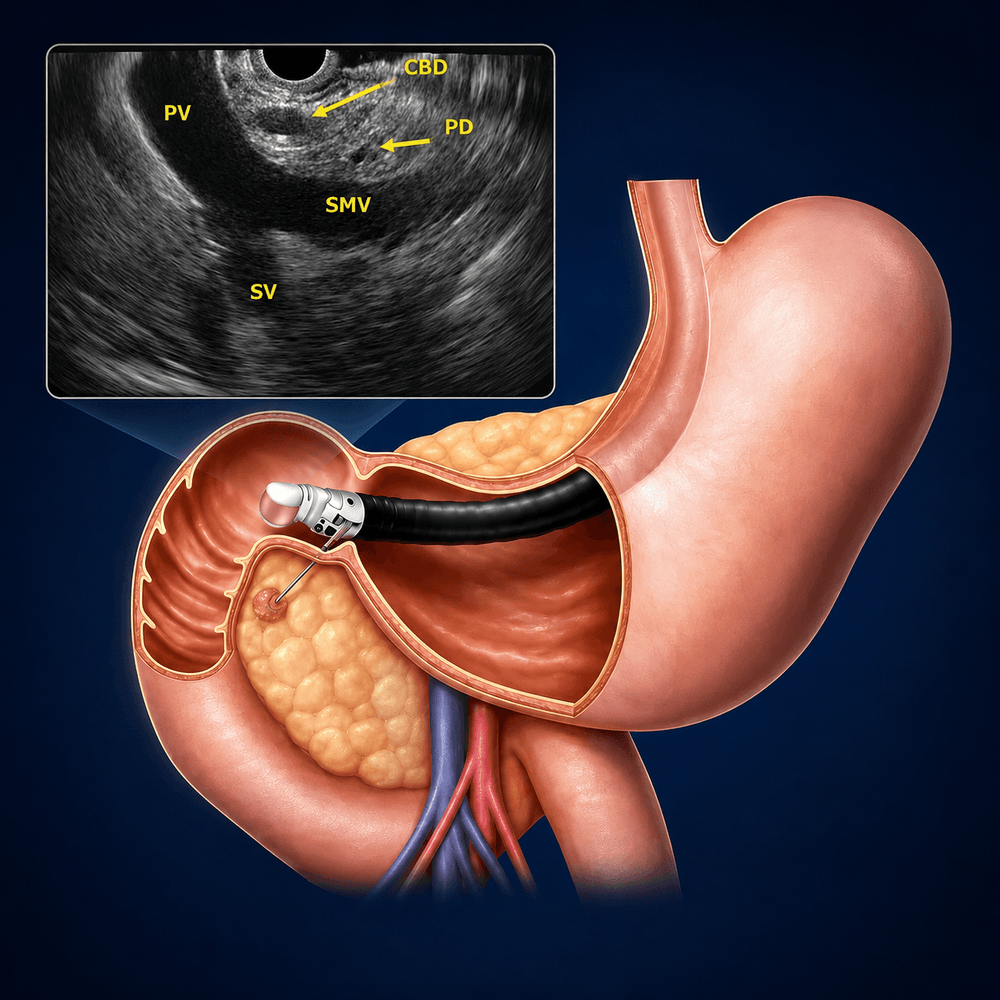
Endoscopic Ultrasound, or EUS, is a specialized procedure that combines endoscopy with ultrasound imaging to produce detailed images of the digestive tract and the surrounding organs.
It is commonly used for both diagnostic and therapeutic purposes, as it can provide important information that may not be available through other imaging methods.
During the procedure, a flexible endoscope equipped with an ultrasound probe is passed through the mouth into the digestive tract, allowing the doctor to examine nearby organs and structures with high precision.
Diagnostic Uses of EUS
EUS can be used to evaluate a wide range of gastrointestinal and surrounding organ conditions, including:
- Assessment of pancreatic diseases, such as pancreatic tumors, pancreatic cysts, and chronic pancreatitis.
- Evaluation of the bile duct, gallbladder, and liver.
- Detection of masses, cysts, tumors, and bile duct stones.
- Staging of gastrointestinal tumors, including tumors of the esophagus, stomach, duodenum, and rectum.
- Evaluation of enlarged lymph nodes in the abdomen and chest.
- Assessment of tumors arising beneath the mucosal layer of the gastrointestinal tract.
Tissue Sampling During EUS
EUS can also be used to take tissue samples for pathological analysis.
This is usually performed using a fine needle passed through the endoscope, allowing the doctor to obtain samples from suspicious lesions, masses, lymph nodes, or pancreatic cysts for accurate diagnosis.
Therapeutic Uses of EUS
In addition to diagnosis, EUS can be used to perform several advanced therapeutic procedures, including:
- Drainage of bile ducts in cases of obstruction, especially when ERCP is unsuccessful.
- Drainage of pancreatic fluid collections or pancreatic cysts that may develop after inflammation.
- Management of certain types of chronic pain associated with pancreatic, liver, or stomach tumors.
Why Is EUS Important?
EUS is an advanced and highly accurate procedure that helps doctors diagnose complex gastrointestinal, pancreatic, biliary, and liver conditions. It also allows certain treatments to be performed in a minimally invasive way, often avoiding the need for more invasive surgical procedures.


